
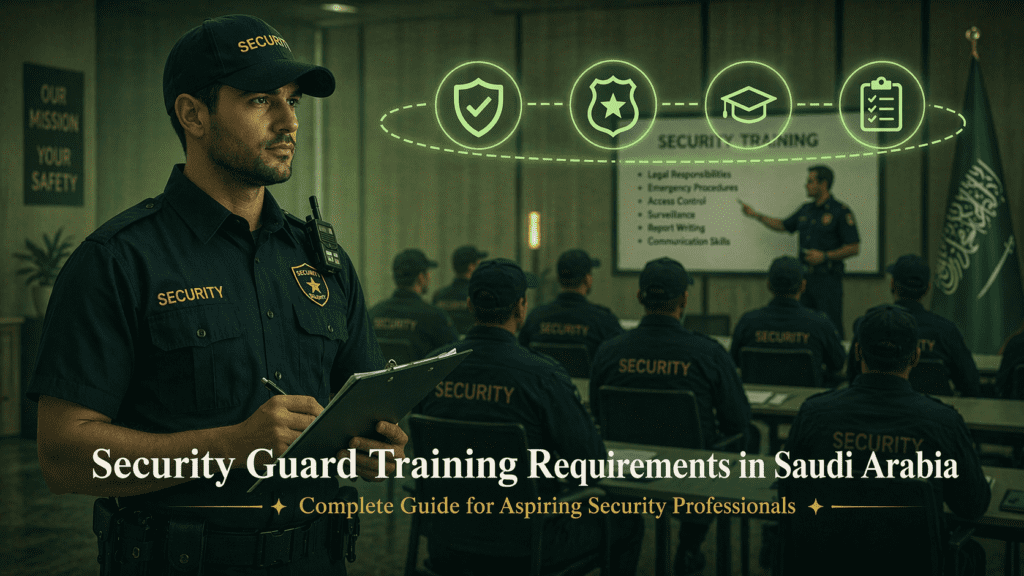
Security guards are no longer just gatekeepers. In Saudi Arabia, they play a critical role in protecting businesses, managing crowds, preventing incidents, and ensuring public safety across different environments.
From large commercial centers in Riyadh and Jeddah to industrial facilities in Dammam, Khobar, and Dhahran, trained security personnel are essential. In religious cities like Mecca and Medina, the need becomes even more serious due to large gatherings and high safety expectations.
This leads to an important question for both job seekers and businesses, what are the security guard training requirements in Saudi Arabia?
In this guide, we will break everything down in a clear and practical way so you understand exactly what training involves, what skills are required, and how to ensure you are working with properly trained professionals.
Security Guard Training Requirements in Saudi Arabia, What You Need to Know
Security training in Saudi Arabia is structured to ensure professionalism, safety, and compliance with regulations.
Why Training Standards Matter
Proper training is not optional, it directly affects:
- Public safety
- Business reputation
- Legal compliance
- Risk management
Untrained guards can create serious problems, while trained professionals prevent incidents before they happen.
Basic Eligibility Before Security Training
Before someone can even start training, they must meet certain requirements.
Age, Education, and Physical Fitness
Most candidates must:
- Be at least 18 years old
- Have basic education
- Be physically fit and capable of long shifts
- Maintain discipline and professional behavior
Security work often involves standing for long hours and responding quickly to situations.
Background Checks and Legal Requirements
Trust is critical in security roles. Candidates must:
- Have a clean criminal record
- Pass identity verification
- Meet company and regulatory standards
These checks ensure that only reliable individuals enter the profession.
Core Security Guard Training Requirements
Once eligibility is met, formal training begins.
Classroom Training Modules
This is the theoretical foundation where trainees learn:
- Security procedures and protocols
- Legal boundaries and responsibilities
- Reporting and documentation
- Customer interaction basics
Understanding legal limits is especially important to avoid misuse of authority.
Practical and Field Training
This is where real learning happens.
Trainees practice:
- Patrolling techniques
- Access control procedures
- Handling visitors and restricted areas
- Using communication tools and surveillance systems
In cities like Riyadh and Jeddah, where large commercial environments exist, these skills are used daily.
Assessment and Certification
After training, candidates must pass:
- Written exams
- Practical assessments
- Physical evaluations
Successful candidates receive certification and can work under licensed security companies.
Mandatory Skills Developed During Training
Training is not just about theory, it builds essential real-world skills.
Communication and Customer Interaction
Security guards must:
- Speak clearly and professionally
- Handle public interactions calmly
- Resolve conflicts without escalation
Observation and Threat Detection
One of the most important skills is awareness.
Guards are trained to:
- Identify suspicious behavior
- Detect risks early
- Monitor surroundings effectively
Emergency Response and Safety Skills
Guards must be ready for emergencies such as:
- Fire incidents
- Medical situations
- Evacuations
- Security threats
These skills are critical in busy areas like shopping malls and event venues.
Specialized Training Based on Security Roles
Not all security jobs are the same, and training reflects that.
Unarmed Security Guard Training
This is the most common type of training and focuses on:
- Basic protection duties
- Customer service
- Monitoring and reporting
If you want to explore roles further, you can refer to your content on types of security guards.
Armed Security Guard Training
This requires additional preparation, including:
- Weapons handling training
- Legal responsibilities
- High-risk situation management
This type of role is strictly regulated.
Industrial and High-Risk Security Training
In places like Dammam, Khobar, and Dhahran, guards working in industrial environments require:
- Safety protocol training
- Hazard awareness
- Emergency response planning
Legal and Regulatory Requirements in Saudi Arabia
Licensing System for Security Guards
Security services must operate under licensed companies.
This ensures:
- Proper training standards
- Legal compliance
- Professional accountability
Employer Responsibilities and Compliance
Companies must:
- Provide trained personnel
- Follow government regulations
- Ensure guards operate within legal limits
External link suggestion: Saudi Ministry of Interior private security regulations
External link suggestion: International security standards such as ASIS International
Security Training Demand Across Saudi Cities
Riyadh and Jeddah Commercial Demand
These cities require trained guards for:
- Offices
- Retail spaces
- Corporate environments
Dammam, Khobar, and Dhahran Industrial Needs
Industrial zones demand:
- Highly trained guards
- Safety-focused personnel
- Experienced professionals
Mecca and Medina Crowd Management Requirements
These cities require:
- Crowd control expertise
- Emergency handling skills
- High discipline levels
How to Choose a Properly Trained Security Guard
Verifying Training and Certification
Before hiring, always check:
- Training certification
- Experience level
- Company licensing
If you need guidance, you can refer to your article on how to hire security guards.
Avoiding Common Hiring Mistakes
Avoid:
- Hiring untrained personnel
- Choosing based only on cost
- Ignoring experience and certification
If you are looking for reliable and professional support, our security guard services provide trained, certified personnel tailored to business needs across Saudi Arabia.
FAQs
What are the basic training requirements for security guards in Saudi Arabia?
They must complete training programs covering security procedures, safety, and communication.
Is certification required for security guards?
Yes, certification is required to work under licensed security companies.
How long does security guard training take?
Basic training usually takes a few weeks, depending on the role.
Do all security guards need the same training?
No, training varies based on job type and risk level.
Can businesses hire untrained security guards?
No, guards must meet training and licensing requirements.
Conclusion
Security guard training requirements in Saudi Arabia are designed to ensure safety, professionalism, and reliability across all sectors. From basic training to specialized roles, every step is important in preparing guards for real-world challenges.
Whether you are hiring for a business in Riyadh, Jeddah, Dammam, Khobar, Dhahran, Mecca, or Medina, choosing properly trained security personnel is essential.
Well-trained guards do more than protect, they represent your business, manage risks, and create a safe environment for everyone.
 English
  Arabic