
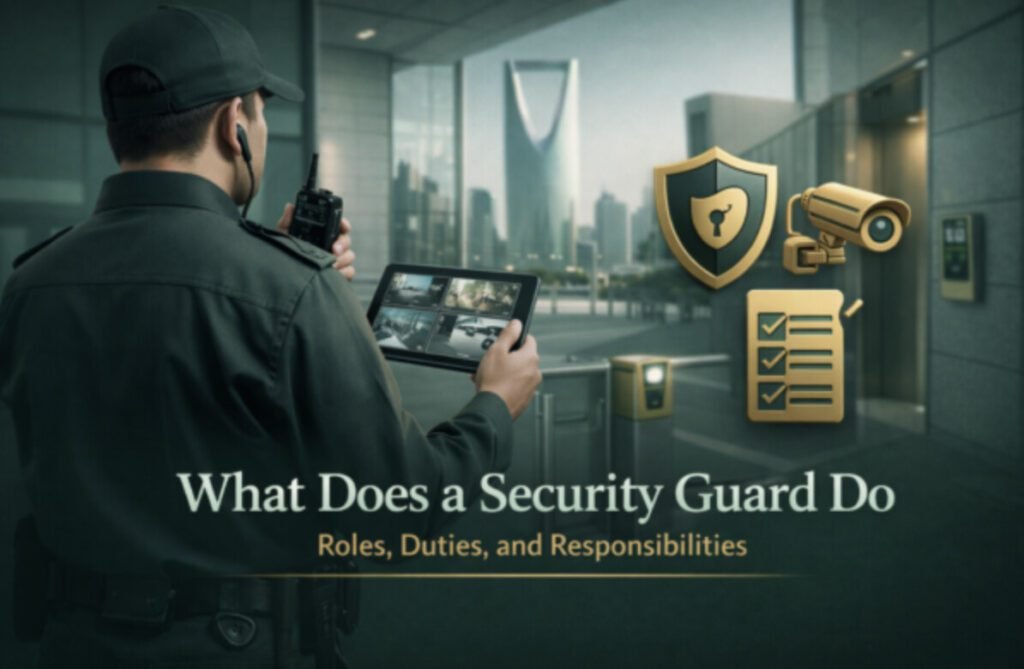
Security guards are a familiar sight across Saudi Arabia. You see them at office buildings in Riyadh, residential compounds in Jeddah, shopping malls, hospitals, construction sites, and large events. Despite their visibility, many people still have a narrow understanding of what a security guard actually does.
The reality is that a security guard’s role goes far beyond standing at a gate or checking IDs. Their work is focused on prevention, awareness, and maintaining order in environments where safety and control matter every day.
What does a security guard do?
At its core, a security guard’s job is to protect people, property, and operations. This protection is achieved primarily through presence and observation rather than force. A professional guard is trained to notice early warning signs, manage access, and respond calmly when situations arise.
In Saudi Arabia’s fast-growing cities and large-scale developments, this preventive role is especially important. Many incidents are avoided simply because a trained guard is present, alert, and prepared to act.
What does a security guard do on a daily basis?
Most of a security guard’s work happens quietly and consistently throughout the day. Routine tasks are designed to reduce risk and ensure that rules and procedures are followed.
Common daily responsibilities include:
- Monitoring entrances and exits
- Observing people and activity for anything unusual
- Conducting patrols of assigned areas
- Enforcing site rules and access control
- Reporting safety issues or suspicious behavior
These tasks may seem simple, but consistency and attention to detail are what make them effective.
Core responsibilities of a security guard
Regardless of the assignment, security guards share a set of core responsibilities. Their role is not reactive by nature. It is preventive and supportive.
Key responsibilities typically involve:
- Deterring theft, vandalism, and unauthorized access
- Identifying potential risks before they escalate
- Responding to alarms or incidents in a controlled manner
- Assisting visitors, employees, or residents when needed
This approach explains why security guarding basics emphasize discipline, observation skills, and clear communication.
How security guard duties change by environment
A security guard’s responsibilities vary depending on where they are assigned.
At construction sites, guards focus on preventing theft of materials, controlling access after working hours, and monitoring large open areas. In commercial buildings and facilities, guards support daily operations by managing visitor access and ensuring a safe environment for staff and customers.
Residential communities require a different balance. Guards are expected to be approachable while maintaining control, often becoming familiar faces to residents. Event environments demand quick thinking, crowd awareness, and calm decision-making, especially when large numbers of people are involved.
Each environment requires a slightly different mindset, even though the core role remains the same.
What authority does a security guard have?
A common misconception is that security guards have the same authority as police. In reality, their authority is limited and clearly defined. Security guards are responsible for observation, prevention, and reporting. They can intervene to stop immediate harm or protect property, but serious enforcement actions are handled by the relevant authorities.
Understanding these limits is important for both clients and the public. It highlights why proper training, clear procedures, and professionalism are essential parts of the job.
Types of security guards and how their roles differ
Security coverage can be structured in different ways depending on the size and risk level of a location.
Some guards are assigned to fixed positions such as entrances, reception areas, or checkpoints. Others perform mobile patrols, moving through larger sites to ensure wider coverage. Patrol-based roles are common in industrial zones, compounds, and large facilities across Saudi Arabia.
There is also a distinction between armed and unarmed assignments. In most residential, commercial, and corporate settings, unarmed guards are preferred. Their effectiveness comes from visibility, communication, and consistency rather than force.
Appearance, uniforms, and professional presence
Uniforms play a practical role in security work. A clear and professional appearance helps establish authority, reassures occupants, and makes security personnel easy to identify.
Badges and identification reinforce accountability, while practical items such as sunglasses are often used in outdoor environments. In Saudi Arabia’s bright climate, this helps guards maintain awareness and comfort during long shifts.
Professional appearance supports trust and smooth interaction, particularly in corporate and residential settings.
Why security guards matter for businesses and communities
Security guards contribute to safety in ways that are often unnoticed. Their presence discourages misconduct, supports order, and provides reassurance to employees, residents, and visitors.
For businesses, guards help protect assets and reduce operational risk. For residential communities, they create a sense of safety and control. For events, they support crowd management and quick response when situations require attention.
This preventive value is why professional security services remain essential across many sectors in the Kingdom.
FAQs
Do security guards only observe, or do they take action?
Security guards actively monitor situations and can intervene when there is an immediate risk. However, serious enforcement actions are handled by authorities.
Are security guards trained to handle emergencies?
Professional guards receive training to respond calmly, follow procedures, and coordinate with emergency services when necessary.
Why are security guards important in Saudi Arabia?
Large developments, high visitor volumes, and complex facilities make preventive security a critical requirement across the country.
Does every location need the same type of security guard?
No. The level and type of security depend on the environment, risk level, and operational needs.
Final thoughts
So, what does a security guard really do? In everyday reality, they prevent problems before they happen, maintain order through awareness and presence, and respond calmly when situations demand attention. In Saudi Arabia’s evolving urban and commercial landscape, this role is more important than ever.
Working with an experienced provider such as Qimah Security Services helps ensure that security guards are trained, professional, and suited to local conditions. When security is done right, it becomes a quiet foundation that allows people, businesses, and communities to operate with confidence.
 English
  Arabic